Biz expansion to foreign countries requires more sophisticated customer support, because, in many cases, the customers will contact the company in a language other than English. They may pose queries at times when the regular office personnel of the company are not available or expect immediate and informative replies regarding different aspects of the offered goods and services or subscriptions, and even technical issues.
Hiring separate teams for each of the languages supported is definitely expensive and challenging, and this is especially true of small business enterprises and fast-growing SaaS companies.
That is where the AI chatbot comes in very handy. It allows the businesses to answer a few common question types, interpret customer’s intentions, and support them in different languages with a single communication channel only.
The feature of the AI chatbot that enables multilingual conversations is the capacity to understand customer’s requests, to come up with the answers, and to employ the translation feature so the chatbot can interact with customers who speak different languages. If the chatbot, on the whole, can be properly set up, it can allow customers to quickly be advised, get their simple problems solved, use support resources, and generally not have to wait until a human being is able to help them.
Indeed, multilingual automation is not just a matter of translating words. Companies need to address language accuracy, cultural aspects, customer privacy, and scenarios where human help is necessary.
Through the merging of AI chatbots which are backed by translation technology of high quality and clear support workflows, companies can make customer service easier to find and also give their support people capacity to deal with difficult queries.
What Is a Multilingual AI Chatbot?
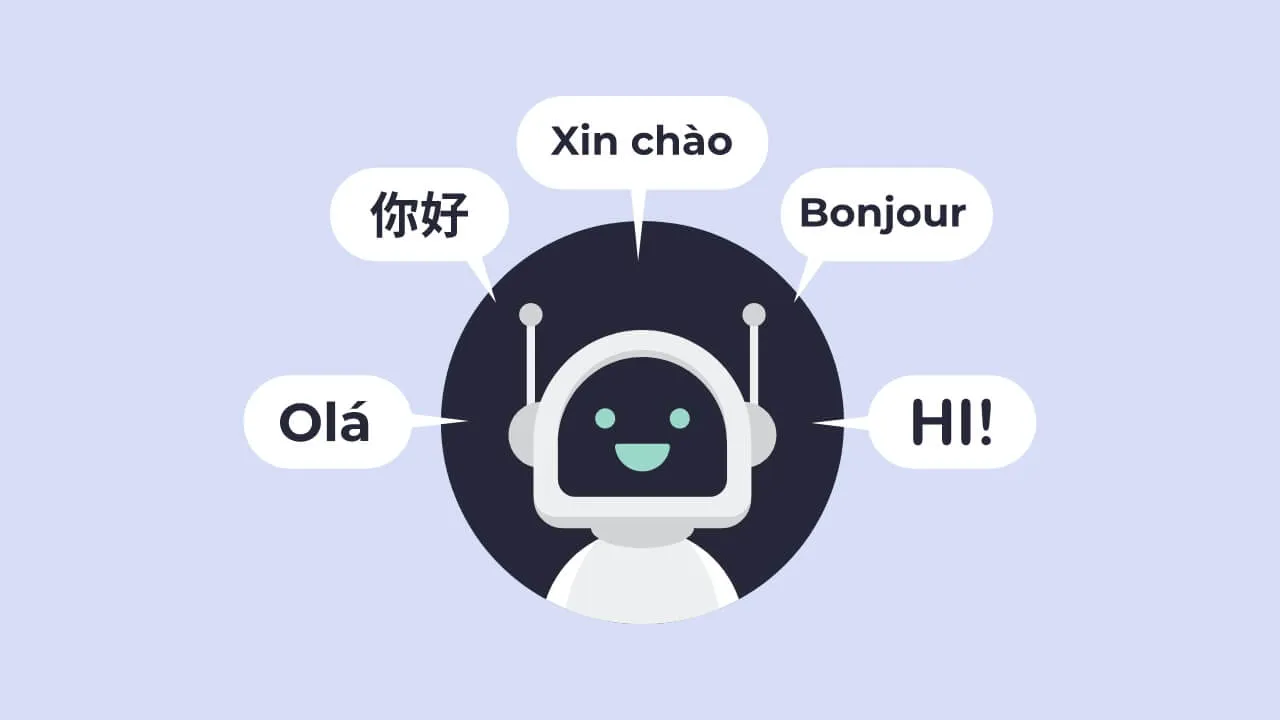
A multilingual AI chatbot is a conversational software program that was created in such a way as to be able to talk with users in several different languages. It could be that it uses natural language processing, large language models, machine translation, and a company’s corporate knowledge base to grasp questions and come up with the relevant replies.
Taking a SaaS company as the example one might think about, a SaaS company may be faced with having customers speaking various languages such as English, Spanish, French, and German. Rather than constructing individual chatbots for every language of customers, the company chooses to implement a single system that has language recognition and multilingual responding capability according to the language detected. The company’s chatbot will switch languages automatically to communicate with a customer in his own language, while at the same time offering the support team with multilingual chat transcription, so as not to have the language barrier hinder the team from being of assistance.
The chatbot may provide various services depending on its capacity, such as answering common questions, explaining product features, helping with product issues, or directing customers to the correct help information.
Some systems work through pre-defined conversation routes, while others depend on AI to grasp questions that are articulated differently. The more sophisticated systems are able to do an amalgamation of both i.e. to use preprogrammed processes for the predictable jobs and AI-generated texts for the supporting questions.
We do not always aim to substitute human customer service. Rather, a multilingual chatbot can respond to regular queries and assist customers in getting the most appropriate information faster.
Communicational Techniques for AI Chatbots to Different Languages
Multilingual chatbot programs may have diverse strategies to comprehend and answer customers. These processes may differ depending on what the platform is and how the technology is designed.
1. Identifying the Customer’s Language
After the customer initiated the chat, the chatbot could detect the language by seeing the message.
An illustration of this scenario could be that a customer speaks Spanish when asking a billing question about the company, which, however, mainly has English written on the support website.
Language detection allows the system to choose an appropriate language for the response or translation workflow.
In some cases, customers can also define the language they like, manually. It can be helpful if the message is too short for language detection to work reliably, or the customer prefers a certain kind of language irrespective of the language he or she uses in their first message.
2. Customer’s Request
With the language being known, the next step for the system to comprehend the message and pinpointing customers’ need
For example, in case a customer says, “After changing my password I can’t access my account”, the chatbot has to pinpoint the issue the customer’s actually complaining about rather than just translating each word of the message.
The chatbot may interpret the message as an account-access issue followed by initiating the company’s problem-solving steps. Besides language detection, chatbots can also be used for various purposes such as understanding customer requests and providing relevant responses.
Systems powered by AI are capable of understanding that different phrases may convey the same meaning but not necessarily. However, effectiveness of such capability depends heavily on the language, context, and underlying model of these systems.
3. Discovery
One of the many functions that a chatbot can perform is to consult a trusted set of documents, such as help guide, product specs, billing information, and customer support frequently asked questions.
Suppose a customer wants to knows the steps involved in terminating a subscription. The chatbot can pull up a set of cancellation guidelines and put together a response with the help of the guidelines.
Tying the chatbot to a trustworthy source of information is key to eliminating unsolicited replies. The company must also be responsible for keeping the chatbot updated with accurate documentation and at the same time not letting the chatbot fabricate policies, rates, product characteristics, or any other features.
4. Creating the Response
Possible that the chatbot converts from the customer’s language message to internal working language before answering and then back translate the answer to the customer’s language.
Other chatbots can handle multilingual messages by processing the messages themselves without using a dedicated step for translation.”
In any case, a well-crafted answer should reflect the original intent behind the question, maintain proper use of terminologies related to the product, and accurately relay any relevant instructions from the documentation. For major cases that require customer support, the company must simulate a complete conversation rather than relying on isolated test of one’s translation skills alone.
Advantages of Using AI Customer Support Systems in Global Business
One way AI-based customer service solutions can significantly impact a business’s performance is by cutting down response times and optimizing handling of multilingual conversations. The actual benefit largely depends on the types of queries you expect the AI to handle, alongside the extent of the integration with other support functions your company already has in place.
Customer Support without Daylight Restrictions
Customer support in an international context can mean different things at different times of the day depending on different countries.
The advantage here is that a chatbot or any conversational AI can respond to a customer’s questions at any hour. This will also allow customers to get the information they need about topics such as creating your customer account, the features available in the product that you’re interested in, how billing and payments are made, and most of the basic problems encountered with technology.
In the case of a customer situated in Germany asking questions after the hours of an US-based support team, the bot could immediately offer documentation without the customer having to wait until the next business day before contact.
Yet, round-the-clock accessibility of the chatbots should not be equated to a guarantee of solving every problem without human involvement. Very complicated issues may require a customer’s call to be transferred to a human customer service specialist through the company’s supported hours if it’s not possible to resolve at anytime. It may even result in arranging a call back during business hours through an on-call process, etc.
Support Workloads can Go Down
It is quite common for customer service teams to receive the same questions from customers concerning password resets, subscription plans, refunds, and questions about how a product or service works.
A multilingual chatbot can take care of routine requests that are qualified for it and refer customers to the right help documents/links. This frees up the human support team to work on technically complex queries, billing disputes, or unusual customer needs that are not the usual type.
Quite often the biggest gain or most benefit from automation of the customer service comes through from the automation of questions that are not only the same but the only type of such questions to the point the customer service gets asked about them every day.
Improved Customer Experiences
It is quite common to see customers get confused or not understanding the problem they are describing or the instructions given when they are being offered customer service in a different language, i.e., one they are not native speakers of.
With multilingual customer service, this means there will be no effort needed and time-wasted as these customers can navigate an interface or a product, read a manual, go through a troubleshooting procedure, or be informed on a platform or a product by means of a support team member, if it is all translated into their language, which is theirs first and therefore one they can understand with ease.
For SaaS companies, this can be very useful when their new customers are being taught to how to use their platform (onboarding) as they might often run into the need of fast and reliable support if their first experience happens to be difficult.
Consistency Across Languages
If there is not a standardized support system or process, employees could give a different interpretation of the same policy.
With the help of a chatbot that has access to official company documents, different language versions of a product can be presented with very similar wording and thus have the same message in different languages.
The system might, for instance, present the customers in English, French, or Spanish the same subscription terms that had been verified.
Negotiating and translating the text is still a part of the business process where businesses should make sure that the information is not misrepresented and the language sounds like the native tongue in the target country.
Support Can Be Expanded More Easily
Hiring multi-lingual agents to support each and every languages is going to be a big financial commitment, especially for small businesses entering the markets multiple at the same time.
Having multilingual AI systems can be a relief for the companies so that they don’t have to hire and train their staff in all regions to support a new language.
Nonetheless, before adding automated customer support to the company services in a particular country, businesses should weigh the number of customers in the market, language support quality, escalation procedures and legal aspects.
How Automatic Translation Boosts Customer Support Processes
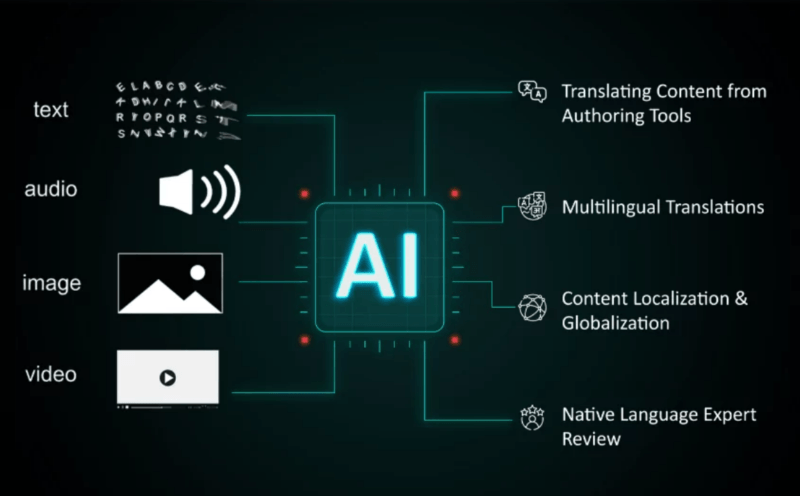
By means of language translation, automated system can allow customers to communicate with support teams effectively even if they are not in the same language.
This kind of work will go like
First, the customer sends a question written in their language. The system detects the language and proceeds with processing the request.
Then, the robot finds the necessary information of the company and formulates the reply. If required, translation technology changes the message or response from one language to another.
The customer gets the answer in the language they chose. On the other hand, the customer support system might also keep the original message in its raw form along with the translated version.
In the case when a human agent is needed for the matter, the conversation with the original message, the translation, and a summary of the interaction will be transferred.
Adopting such technology will not only help reduce the time spent on repetitive translation work but also help in handling a multilingual dialogue more efficiently.
Maybe companies shouldn’t automatically trust every translation to be good enough for the immediate usage. Certain examples such as refund policies, security instructions, financial information, or technical troubleshooting steps may need one more review.
For the companies that are making their own systems, the Google Cloud Translation documentation details the information about the translation capabilities and the supported implementation options.
How to Choose Multilingual Customer Service Software
If taken to an extreme, every support platform does not offer the same multilingual capabilities. Some only have basic translation features, others combine conversational AI, knowledge-base search, workflow automation, and agent handoffs.
Your company should first determine which of the following features are most important and then choose the solution accordingly.
Language Coverage and Quality
Look at which languages and language variations the platform supports. It’s possible that a system is very good in detecting one language but on the other hand, it may produce very unreliable results in another.
Experiment with it using realistic customer messages. These messages will most likely contain informal language, spelling mistakes, technical terminology, and common regional expressions.
It is the objective of this work to determine if customers could get useful, clear answers, the business languages aside from business languages the matter to customers. In other words, the company wants to know the level of accuracy and quality of translation as well as customer’s ability to receive the translated contents in languages the business is not fluent in.
Knowledge Base Integration
Firstly, the chatbot’s access to the most up-to-date, accurate, and complete information on products, policies and services must be ensured.
Secondly, you should find the solution that allows you to incorporate the internal help articles, customer FAQs, user manuals, and other such materials to become the sources of the customer help content.
Companies might also want to know at what speed the chatbot can be fed or re-fed with the updated information and how the system behaves when it comes across a customer question for which no answer from a reliable source exists.
Integration With Existing Support Systems
A chatbot offering multilingual support is more efficient with regard to customer services when it is connected to other company’s support tools like CRM, customer support software, ticketing, or messaging.
It may have to raise support issues at customer’s end, retrieve the customer account details only after they are approved by the system or hand conversations over to the right department.
To make sure the platform is the right one, the availability of integrations, the requirements that each integration poses – permissions and the like – and whether the intended workflows are part of the selected plan must be looked up.
Historical Context and Conversation
It is not fair to expect customer support agents to keep the customer’s problems in the loop when conversations go back and forth from the automated support to the real human being, the customer, in many cases, would end up repeating the same problem that the customer has explained already.
A well-designed system would keep the context of the dialogue and even send back the first message, translation, prior help steps, an excerpt of all that to the agents.
This helps reduce time for the transition from one agent to the other and also makes the experience less stressful.
Security and protection of Data
The support dialogues can contain many important things such as customer details, account numbers, order details, or other sensitive information.
Therefore, companies should check their data retention policies, access controls, encryption, permissions of integration, and the applicable privacy regulations.
Furthermore, a company needs to decide whether the customer dialogues are being employed to train the models and whether any customer controls are in place governing such training.
How Language Accuracy Impacts Customer Support via AI
The customer gets the right information only when language is properly captured by AI. The response might be very fluent in grammar but may contain a wrong directive or the alteration of a policy. The language translation has to be right not just because it is grammatically correct, but also due to the accuracy of the semantics.
This article discusses the main reasons why multilingual chatbot performance differs.
A different regional dialect of the same language can vary in vocabulary, level of formality, and expressions.
Regional Language Differences
The same language may have different expressions, vocabulary, and levels of formality across regions.
A chatbot designed for one Spanish-speaking market may not always use the most natural expressions for customers in another. Similar differences exist across English, French, Arabic, and other widely spoken languages.
Businesses should test the language variants relevant to their customer base and adjust terminology where necessary.
Technical and Industry-Specific Terms
SaaS platforms, financial services, and technical products often rely on specialized vocabulary.
A mistranslated feature name or troubleshooting instruction can cause customers to follow the wrong steps. Companies should maintain approved glossaries and review translations involving critical product terminology.
Ambiguous Questions
Customers may write incomplete messages, use slang, or describe problems without enough detail.
Rather than guessing, the chatbot should ask a clarifying question or direct the customer to an appropriate support agent.
For example, a message such as “It isn’t working” does not provide enough information to identify the cause. A helpful system should ask which feature is affected and whether an error message appears.
Measuring Translation Quality
Businesses can evaluate multilingual chatbot performance by reviewing conversation samples and tracking recurring errors.
Useful measures include successful issue resolution, escalation rates, customer satisfaction, repeated questions, and the frequency of corrections made by human agents.
Native-speaking reviewers can help identify awkward wording, incorrect terminology, and cultural issues that automated metrics may miss.
Transferring Customer Requests to Human Operators
It is still true that a great chatbot can’t handle all customer concerns by itself. Therefore, it is very important that a support system of a company has a well-defined and easy way for the conversation to pass from a chatbot to a human operator without delays.
A human-agent handoff is the moment when a chatbot identifies that an issue a customer has raised can’t be resolved by the AI or should at least be handled by a human.
The Right Circumstances for a Chatbot Escalation
Businesses should set-up escalation rules for the following types of scenarios:
- Technical queries which remain unresolved after initial attempts at resolution
- Refund requests, billing disputes, or unusual account problems
- Safety worries or potential account breaches
- Complainsthat are sensitive or involve emotional issues
- Inquiring about a subject that requires an authorized business decision
- Several misunderstandings or lack of confidence in the answer
The chatbot also has to offer escalation options when a customer specifically asks for a human agent. But this is dependent on the customer support arrangements of the company.
Improving the Efficiency of Handoffs
During the transfer, the customer context should not be lost. As human agents get a new customer’s message in addition to their translations, all the troubleshoot steps customers have taken and any useful summary the system has generated, etc. They need all of these to be passed on if handoffs are to be effective.
The interface needs to clearly convey to customers when a conversation will be transferred and what their next steps are.
When an agent is unavailable, the system might inform customers of available help time or the alternative would be creating a ticket for later handling. It should not, however, set promises that the company cannot deliver.
Additionally, businesses should give agents the opportunity to fix wrong translations and warn of chatbot errors repeating themselves. These inputs might be the reason for updating knowledge, terminology and escalation rules regularly.
Practical Implementation of Multilingual AI Chatbots
SaaS Onboarding and Customer Support
Beware, Software companies can make it easy for new users and understand features of a product, get through setting up their account, and find right manual through the help of Chatbots.
If we take customer who speaks theFrench language as example, they might ask the question how to create an invitation of team members or the configuration of a dashboard. The Chatbot will come up with right instructions and present them in a customer’s language.
Very complex technical problems should be referred to the support staff.
Online Shopping Customer Support
E-shoppers can benefit a lot from multilingual chatbots, these automated systems will be able to provide information about the available products including product availability, different shipping options, returning procedures besides giving order number and tracking.
The machine learning model is supposed to get current order data and also policies to be complied with approved ones as a basis for giving specific answers. Problems with lost orders, disputed fees, or exceptions in return policies may require a human intervention.
Inquiries about Sales to International Buyers
Companies which receive sales enquiries from international customers could utilize AI to inform potential buyer’s in a language of their choice on product details, service offerings and quotation.
Moreover an AI customer conversation system could be also utilized to pre-qualify a prospect by gathering their relevant details before introducing the qualified lead to the concerned sales department.
Nonetheless prices, promotional offers, contract clauses and other kinds of business related commitments should be obtained from official verified company sources and not from AI responses which are just generated guesses without being validated.
Travel, Accommodation and Hospitality Services
Hotels, travel providers and booking platforms often cater to customers with different languages.
Leveraging a multilingual chatbot, a customer can be made familiar with the booking process and informed about the facilities. Also, the bot can tackle general customer questions around the check-in, etc.
However, a human being might be needed if there is, say, a request relating to cancelling, some changes in travel plans not under the customer’s control or a special request.
Common Mistakes to Avoid
Achieved through the elimination of some common mistakes made during implementation, companies can significantly minimize problems.
Picking too many languages at the beginning: It would be wisest to first deploy with those languages spoken by the main target customers. After a period of testing and evaluating both quality and support workstreams, a further rollout of languages can be considered.
Putting too much faith in machine translation: Important replies should be manually checked and there needs to be a library of approved terms for such things as products and services, policies and technical instructions.
Using out-of-date info: The chatbot should be linked to an automatically updated documentation source and the content it pulls from there in order to respond to questions should be reviewed regularly.
Making human support inaccessible: Customer support agents are not only human beings with different personality traits, but more importantly customer service specialists. They know how to handle the problem, the product and the services. If the customer is not satisfied with the service after automated response, they should have a very clear way of connecting with an agent.
Sending or exposing confidential customer data without their knowledge: Put in place the appropriate safeguards for the data being collected by the conversation, account details, and integrated systems.
Only gauging speed of replies: Even with rapid responses, mistakes can still be made. Besides the customer satisfaction survey which measures customer satisfaction, the number of repeat calls the customer makes after the first contact is also a measure of the customer relationship quality while at the same time, the result of the escalation and resolution is a good indicator of customer service quality.
Well-considered roll-out and introduction should bring about a state of automation that is at the same time safe, transparent, and human-support-ready.
Final Notes
Multilingual chatbots backed by AI are tools that allow business to speak to overseas customers by means of conversational AI, machine translation & automated support workflows. They offer solutions for common queries, facilitate access to product information, and lighten the workload of customer support teams.
Nonetheless, effective multilingual support is an entirely different matter that requires language options only are not enough. Organizations will also have to ensure the presence, reliability of the sources of knowledge, testing specific to each language, data privacy controls, and setting clear rules of how a conversation can be handed to an agent.
An effective AI customer support tool automatically deals with routine queries without requiring any human intervention and detects when a problem should be escalated to a support agent. Companies can develop a multilingual customer service experience with AI that will help improve overall efficiency and be trustworthy as well through tracking how accurately the AI is responding, reviewing customer feedback and continuously improving the support workflow.
With its help, scaling SaaS companies and small enterprises can offer their customers international support efficiently without letting go of their main goal which is solving the customer’s problem in the language that the customer is comfortable with.