

Mobile searches for “near me” that contain a version of “can I buy” or “to buy” have gone up by more than 500% in just two years. People looking for these items nearby not only changes local business owners’ perspectives but also signals them to make it a priority. It marks a significant change in the way consumers act when the main thing they want to buy is the closest goods and the most trustworthy ones. If your business does not show up for those searches, then you are not only missing clicks but you are also giving your competitors the customers.
Many businesses are acquainted with the general idea of Search Engine Optimization (SEO), but only a handful successfully implement the practice of local link building. Contrary to general link building which largely aims to gather prestigious links from all types of websites, local link building is more concerned with getting backlinks specifically from geographically close neighbors. It’s about convincing search engines that you are not simply a business fitting the theme of a search but also that you belong to the area of the search.
This differentiation is very important. A hyperlink from a major national news outlet can increase your overall authority, but one from your local chamber of commerce, a nearby university, or a popular city blog communicates to Google a very specific message: you are a local leader. This creates the relevance and trust necessary for you to rule local search results.
Here, we will take a deep dive into the local link building tactics and case studies, going beyond the usual old-school advice. These practical, results-oriented tips will help you catch up and outrank your competitors in your local search ecosystem.
Understanding Local SEO and the Power of Links
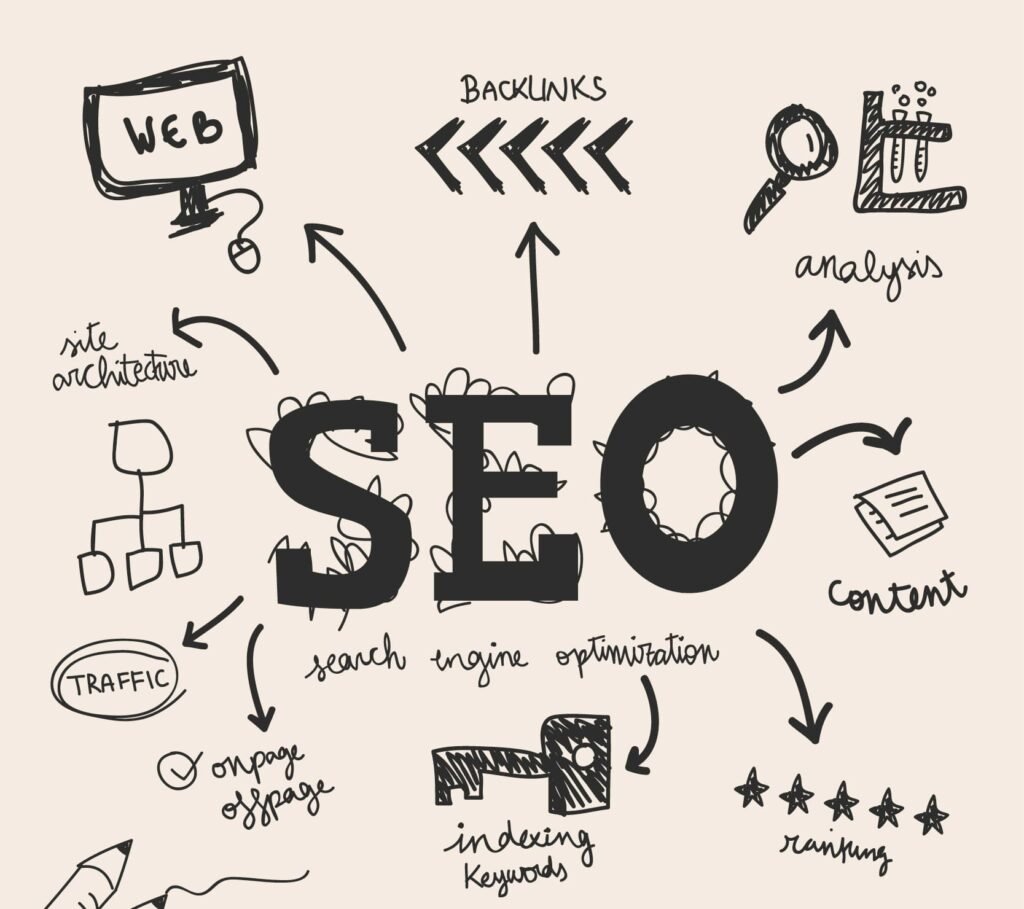
Local Link Building is one of the most powerful ways to get on the first page of local search results. But what makes this form of SEO so effective? To answer this question, we must understand the engine behind local SEO. Google’s local search algorithm is not exactly the same as its traditional organic search algorithm. As per Google’s own documentation, local results depend largely on three main factors:
- Relevance: How well a local Business Profile fits the searcher’s query.
- Distance: The geographical location of each potential search result in relation to the searcher’s location or the location specified in the query.
- Prominence: How well-known a business is.
Prominence is the aspect where link building plays a vital part. Google uses prominence as a metric that is visible through third-party sites, where it sees mentions, links, articles, and directories.
Link Equity in a Local Context
In the realm of general SEO, a site’s Domain Authority (DA) often trumps everything else. Nevertheless, in Local SEO the context has the final say. Consider a situation where a local plumber, as a business in need of local customers, comments on how a small church website (low DA) link has more value to him than a generic top home improvement directory (national, with a much higher DA).
What is the reason behind this? The link from the church website indicates a strong signal for the location. The link is tying the plumber’s business to a particular neighborhood and thus a local community institution, at the same time reinforcing the signals “Distance” and “Prominence”. This “local link equity” is the magical ingredient that enables small enterprises to surpass big national corporations in particular local areas.
The Competitive Edge
Companies with strong local backlink profiles are usually the ones who dominate the “Local Pack” (also referred to as the Map Pack) — the group of three business listings that appear below the map in Google search results. These spots are considered prime real estate as they show up above the traditional organic results. By obtaining high-quality local links, you are giving Google a signal that your business can be trusted locally which increases the likelihood of you getting one of these coveted slots.
Identifying Prime Local Link Building Opportunities
Link building strategies do not necessarily require you to be highly innovative. Most of the time the main opportunities are already in front of your eyes – only make an effort to spot them.
Competitor Analysis
The quickest way to get new link opportunities is to look at where your strongest competitors are getting their links from. Use an SEO tool such as Ahrefs, Semrush, or Moz and perform a backlink analysis on the businesses that are currently ranking in the Local Pack for your target keywords.
Try finding patterns in their backlinks. Are they listed on local directories? Has a local lifestyle blog featured them? Maybe they sponsored a local event or a charity? This way of looking at things, called “reverse-engineering,” provides you with a ready-to-use list of potential links sources that are known in your niche to be effective.
Unlinked Mentions
Occasionally, you get to be the subject of a discussion but nobody links to you. Local news outlets, community blogs, event pages, etc., might write about your business or the event you have hosted but not necessarily put a hyperlink.
Find these instances by typing your brand name (and its variations) into Google. When you come across an unlinked mention, you can reach out to the webmaster or the author of that site. The other person’s reply to an email which politely expresses gratitude for the mention and requests that a link to the website be added is usually a “Yes”. It is a low-exertion and high-yield method.
The “Vendor and Partner” Audit
The relationships that you have established in the real world will be your most significant virtual assets. Make a list of all the suppliers, distributors, and business partners you have. Check their sites to see if they have a “partners”, “distributors” or “clients” page. If you have a good rapport with a local supplier, you might try asking them if they can either mention you or put up a link of your business on their site. You do not even have to negotiate for the favor. Given that you already have a business relationship, these backlinks are usually high in relevance and pretty easy to get.
Creating High-Quality, Local-Focused Content
“Content is king” is a term often used in SEO circles. However, in the context of local SEO, “Context is king.” Generic how-to articles cannot date local links because they are in competition with all the other content of the same kind on the internet. To be able to generate local links, you need hyper-local content.
Beyond Generic Blogs
Your hyper-local content should correspond with the issues, desires, and ethnological features of the locals. It grants the value that a nationwide competitor is not capable of delivering.
Content Ideas that Attract Links
- Local Resource Guides: Compiling detailed community service guides for municipal residents is yet another great way of generating local links. A real estate professional, as an instance, may come up with “The Ultimate Guide to Parks in [City Name]” and “Best Date Night Spots in [Neighborhood].” These “go-to” resources can be considered as highly linkable assets by other local businesses and community groups.
- Local Case Studies: Publicize improvements you have made for a famous local landmark, a charity, or a business. In the case of a landscaping contractor who has taken care of town square renovation, the contractor could demonstrate how the work was done. Both the local news and the town council will probably provide backlinks.
- Event Coverage: Have you been or have you been sponsoring a local festival, if so why not write up a post mentioning the other local businesses that you have come across. Please let them know that the information that you have given them, and, in return, they might just link back to your coverage.
Targeting Local Keywords
While developing this sort of content, thoughtful integration of Local SEO keywords is essential. Instead of simply using the phrase “best coffee”, you should try and target “best espresso in downtown [City]”. This is one way of letting the search engines know exactly which geographical area your content corresponds to thereby further raising your potential for local ranking.
Leveraging Local Business Directories and Citations
Directors and citations, though not exactly the most appealing part of link building, constitute the foundation on which local prominence is built.
The Foundation of Trust
A good number of directory links have a “no-follow” tag, which means that they are not capable of directly passing the link juice to your site. However, they are invaluable to setting up citations which are basically instances where your business name, address, and phone number (NAP) appear together on various websites across the world wide web. These citations act like trust signals in that they confirm that your business is physically located at a certain address.
NAP Consistency
NAP consistency is the rule that should be adhered to without exception when it comes to local directories. To maintain search engines and user trust, the same Name, Address, and Phone number should be used on every platform. If your Google Business Profile uses the abbreviations “St.”, while Yelp spells out “Street”, and additionally, if there’s an old contact number of yours on a Yellow Pages listing, Zip code search engines will be confused and their trust will be undermined.
The “Big 4” vs. Niche Directories
Most of the time, companies that operate within The “Big 4” (Foursquare, Data Axle, Neustar/Localeze) which are major data aggregators, tend to be the ones whose data ends up in smaller directories. However, that should not be your stopping point. Hyper-local directories are usually more influential in deciding local rankings. You might want to consider the following venues:
- The local Chamber of Commerce.
- City-specific business associations.
- Neighborhood business improvement districts.
A hyperlink that originates from your local Chamber of Commerce is like a beacon that signals to the local Google algorithm that you are a legitimate local business hence it is far more significant than any national directory.
Guest Posting on Local Websites and Blogs
Guest posting facilitates you in tapping into the audiences and authorities of established local sites.
Finding the Right Hosts
Disregard the generic-type “guest post” platforms. Instead, try to find:
- Local newspapers and magazine sites.
- Blogs on lifestyle and culture at the city level.
- Non-competitive local businesses e.g. A wedding photographer guest posting on a local florist’s blog.
- University or college blogs.
The Pitch
When you are making your pitch, put your effort into creating value and not merely the link. Don’t plead for a favor but rather give them something useful. From the point of view of the editor of the local lifestyle blog, you could request an article, “Five Hidden Gems for Home Decor in [City]” (where your business is featured together with others). This method would be delivering publication-ready content to editors and valuable information to their readers, thus increasing your chances of obtaining a yes.
Relevance Over Metrics
Keep in mind that in local link building it is relevance that beats metrics. For instance, a local “mom blog” with a low Domain Authority that solely writes about your city is a better link source than a high-DA general parenting site with no geographic focus. Local relevance is what connects your business to the community in the eyes of the search algorithm.
Engaging with Local Influencers and Community
Most times, it’s the actions that you take in the physical world that yield you the best online results. Having an active role in your community creates your digital footprints.
Sponsorships and Charities
Sponsor a Little League team, a charity 5K run, or a local arts festival, and you will be giving back to the community while at the same time getting a high-quality link. Each of these organizations typically possesses .org or .edu domains, which are among the most trusted by search engines. A majority of sponsorship deals entail a logo and a link on the event or organization’s website.
Scholarships
Developing a local scholarship program is a highly effective method. The offering of a small scholarship to students from your area enables you to make contact with local high schools, colleges, and universities which in turn list the scholarship on their financial aid or external scholarships pages. These .edu links can be likened to SEO’s “gold dust” since they pass a great amount of authority and trust.
Local Influencer Collaboration
Partner up with local micro-influencers such as foodies, lifestyle bloggers, or local Instagram personalities. They can be invited to use your service or product in return for posting a review on their blog. While links from social media platforms are typically no-follow, many of those influencers have blogs where they can provide a valuable “do-follow” link.
Monitoring and Measuring Your Local Link Building Efforts
It is impossible to improve a thing that you have not measured in the first place. Measurement of results allows you to have the courage to continue what is working and abandon what doesn’t.
Key Metrics to Watch
There is no point in obsessing over the total number of links only. Concentrate on:
- Referral Traffic: Have these links been used by visitors to your site?
- Local Ranking Improvements: Are you moving up and showing more frequently in the Map Pack for the given target keywords?
- Domain Authority/Rating: In terms of your overall site authority, are you heading in the right direction (up) over time?
Tools of the Trade
You may use Google Search Console for finding out which websites are linking to you and how much traffic they send. Services such as Semrush or Ahrefs enable you to track new backlinks and monitor the overall condition of your backlink portfolio, so you can be sure that you are not getting toxic links.
The Timeline
Patience should be your virtue. SEO is not a sprint but a marathon. It may take months for the effect of a new link building campaign to be felt. Consistency is more of a factor than intensity; getting hold of a couple of top-notch local links per month is more beneficial than a sudden spike followed by silence.
Common Mistakes to Avoid in Local Link Building
With a good heart, you may still damage your rankings if you are not careful.
- Buying Links: Google’s spam policies are very clear on this matter. What Google does with the manual actions that are a consequence of violation is to remove the indexed pages from the search engine results pages completely. So, stay away from “100 local links for $50” type of service.
- Irrelevance: When you get a backlink from a website in a foreign country or one that operates in an entirely different industry, the algorithm gets confused. For example, a link from a Russian gambling site will not benefit a Chicago bakery; on the contrary, it is likely to get flagged as spam.
- Ignoring Anchor Text: Anchor text is the word(s) you can click on in a hyperlink. Always leave some room for naturalness by not “over-optimizing” it with exact-match keywords (example: best pizza NYC) every time. Branded anchor text (example: Joe’s Pizza) or generic text (example: visit their website) is a safer choice and looks more organic to search engines.
Future-Proofing Your Strategy
Getting good at local link building means instinctively knowing that you are not just trying to fool the algorithm but rather the algorithm is viewing what you are doing as a reflection of your real-world community standing. Producing hyper-local content, establishing authentic partnerships, and properly handling your citations technically, all contribute to building a moat around your business that competitors cannot easily cross.
As Google is moving toward “Entity-Based SEO”—the understanding of businesses not just as collections of keywords but real-world entities—these real-world signals will keep gaining in importance. The connections you form today via sponsorships, partnerships, and community involvement are the investments in the long-term health of your online presence.
Shall we get started with increasing your local ranking? Begin by making a citation audit this week or just contact a single local partner for a link. Your journey to the top of the Map Pack starts with one point of contact that is relevant.
