
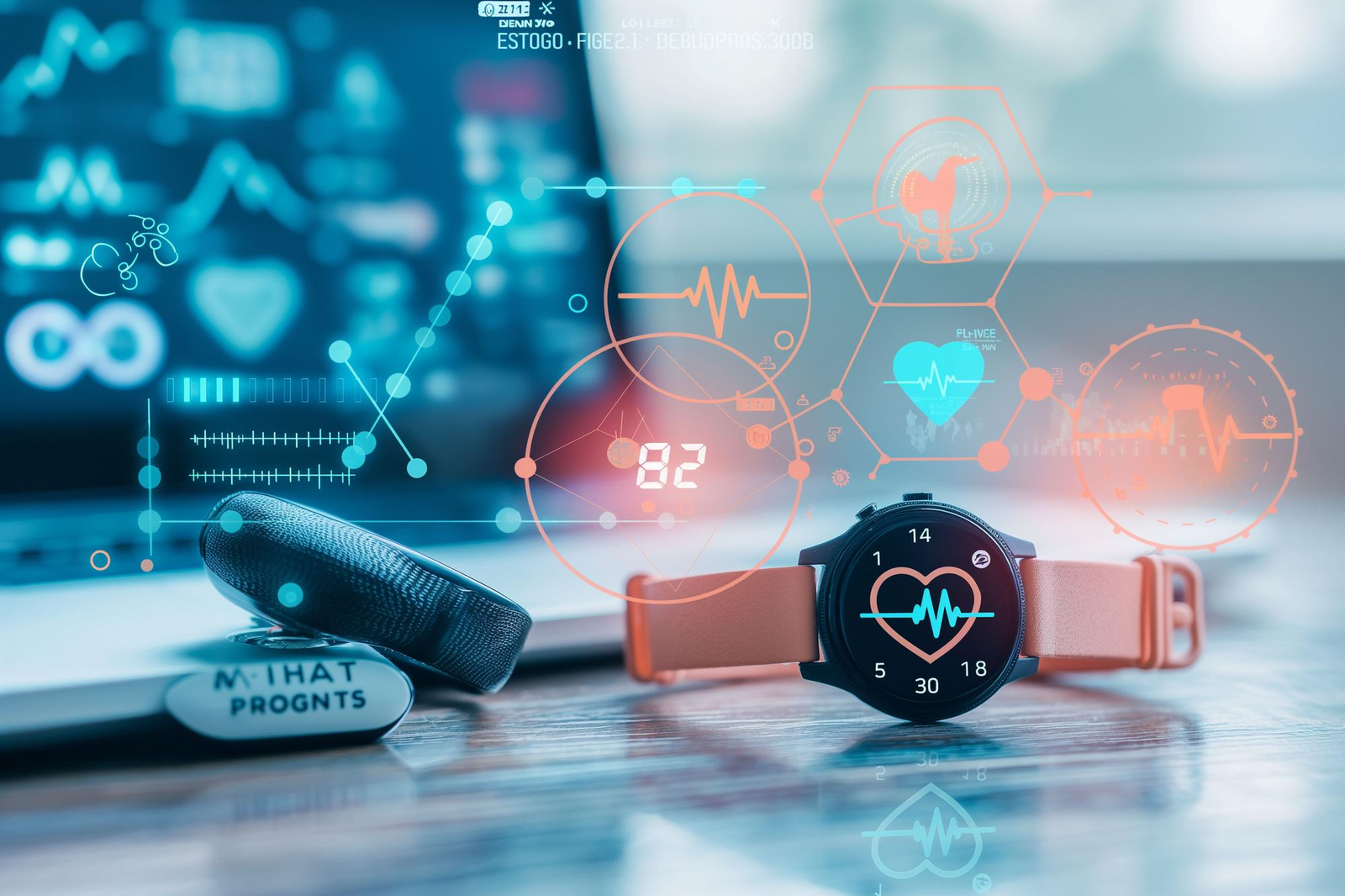
According to Grand View Research, the global market for wearable medical devices is expected to rise by $195.6 billion in 2027. That figure is like a story that deserves attention.
Historically, “tracking one’s health” was limited to using a scale or counting the laps in a track. Nowadays, simply wearing a device on one’s wrist can accomplish so many tasks such as discovering an irregular heartbeat, measuring blood oxygen levels, and even pointing out possible sleep disorders without having to completely finish one’s morning coffee. Actually, the transformation from being simple step counters to becoming smart health devices has already occurred without most of us realizing and it is changing our perceptions about personal health drastically.
Indeed, the centerpiece of this change is a straightforward yet very compelling concept: health data should not be confined to clinics only. Today, more and more people are becoming the owners of their health, and wearable health technology is a great weapon for doing that. From athletes striving to improve their performance to patients with chronic diseases, these gadgets are literally able to meet their users as they are—on their bodies.
This book will serve as a perfect companion if you want to learn what wearable health technology is, the types of smart health devices that are available, their benefits, the risks of privacy that should not be overlooked, and what the next step is for this swiftly evolving industry.
What Is Wearable Health Technology?
Wearable health technology refers to devices that are worn on the body, are electronic in nature, and can collect and transmit health data in real time. Some of these devices are quite simple and consumer-oriented, such as fitness trackers, while others are clinical-grade monitors used for remotely monitoring patients.
The category’s story goes back much further than most people think. The pedometer, a basic mechanical step counter, was first developed in the 1960s and it was the first example of personal health tracking. The 1980s and 1990s saw the introduction of heart rate monitors and GPS fitness devices, mainly used by top athletes. The real game-changer was in 2009 when Fitbit initiated continuous health monitoring awareness of the general public with its first clip-on tracker.
Smartwatches were the next big thing by the early 2010s. The launch of Apple Watch in 2015 was a turning point— not just as a wearable fitness tech product but as a platform capable of delivering clinical-grade heart rhythm detection through a consumer device. Pushing further innovation has been happening since then at a very fast rate.
Central to all these developments is the Internet of Things (IoT). Most of today’s health monitoring devices do not work in isolation—they pair with mobile phones, send data to the cloud, and increasingly share information directly with healthcare professionals. For example, a patient’s continuous glucose monitoring can be made available to their endocrinologist in real-time despite being thousands of kilometers away. The quality of this connection is what makes wearables crucial healthcare tools rather than merely fun gadgets.
Types of Wearable Health Technology
Various types of smart health devices can be found in the market, each catered to different health needs and user profiles.
Smartwatches and Fitness Trackers
Most of us are aware and have probably seen these health monitoring devices already. The main features are heart rate monitoring, step counting, and sleep tracking through an activity log. Location is really controlled by an ecosystem of various manufacturers like the Apple Watch, the Fitbit series, and Garmin devices that provide different levels of complexity in terms of features.
Fitness buffs use these wearables for gauging the intensity of their workouts as well as proper recovery. Weight watchers managing metabolic health will find such devices helpful in their fight against their adversaries such as stress, sedentary lifestyle, and unhealthy eating choices by providing constant motivation. Moreover, these types of gadgets are becoming so advanced that they almost attract people who don’t have any special fitness goals—just wish for a better understanding of their body.
Continuous Glucose Monitors (CGMs)
CGMs are arguably the most remarkable piece of wearable health technology for people living with diabetes or prediabetes. These tiny devices, stuck to the skin’s surface, measure glucose levels in the interstitial fluid just beneath the skin every few minutes, thus doing away with the need for finger-pricking tests.
Models like the Dexcom G7 and Abbott FreeStyle Libre have revolutionized diabetes management by offering an uninterrupted view of glucose levels rather than isolated information. Besides diabetic care, non-diabetic users’ interest is peaking in the usage of CGMs for the optimization of one’s metabolism as a result of the real-time visualized effects of food, stress, and sleep on the blood sugar.
Wearable ECG and Heart Monitors
Wearable ECG has erased the need for being in a hospital when aiming for continuous heart monitoring. Apple Watches from Series 4 on and KardiaMobile by AliveCor are able to detect atrial fibrillation (AFib) which is the most common and one of the most dangerous heart rhythm disorders.
The value for preventive cardiology cannot be overemphasized as in many situations, AFib does not display any obvious symptoms and hence, a lot of people are not diagnosed with it until when they suffer a stroke or another cardiac event that reveals the disease. Wearable smart devices inject a passive, continuous detection mechanism into the process of diagnosis which does not even come close to clinical visits in terms of frequency and convenience. Besides, these technologies have also found their way into remote patient monitoring, allowing a cardiologist to review the rhythm data without the patient needing to make an appointment in person.
Smart Clothing and Patches
Another one of the promising avenues for the rise of wearable fitness technology is smart clothing and skin patches with biosensors.
Smart sports bras that monitor the respiratory rate and biometric patches that track hydration levels are only a few first examples of what this grouping may bring. Unlike wrist-worn gadgets, smart clothes cover a larger body area and open up new possibilities of deriving even more precise measurements for aspects such as respiratory function, muscular activity, and posture. This segment is still at an early stage but definitely contains some tremendous opportunities—in the realms of sports medicine and physical rehab, especially.
Sleep Trackers
Good sleep quality is now well-recognized as one of the strongest predictors for good health over the long run and dedicated devices that help in sleep tracking have grown as a result. Oura Ring and Whoop band are among two well-known examples, both affording very detailed insights into sleep phases, recovery status, and readiness to embark on a given day’s demand.
Unlike smartwatches that track sleep as a feature among others, these devices are more oriented towards recovery and performance. The research linking poor sleep to cardiovascular diseases, metabolic irregularities, and cognitive decline has given this category the clinical credibility it has today in addition to the consumer appeal it has.
Key Benefits of Wearable Fitness Tech
Proactive Wellness Management
Playing a passive role in health management is coming to an end and being proactive is the new approach. It is nice not only to look back at symptoms and then try to figure out what to do. Identification of patterns beforehand—such as heart rate variability or elevated resting heart rate as well as disrupted sleep—can work well with lifestyle changes to keep the health in a reasonable state and as a result, the medical practitioner will be less involved. This mode of thought and action is a dramatic change from the reactive approach people find themselves in when relating to their health.
Chronic Disease Management
However, the potential benefit is true and confirmed diabetes, PCOS, and other heart diseases are especially relevant for smart health devices since such devices distinctly show the patient the situation as well as provide instant support, which was earlier only the doctor and nurse’s work. With the development of communication and hospital resources still being sparse, efficient patient monitoring can be done by sharing the patient’s data remotely with the healthcare team with the patient being involved fully in care decisions while old and unnecessary physical meets get minimized.
Working example: telehealth-enabled glucose monitoring combined with CGM was shown to result in better patient control and substantially less emergencies in a recent study relative to the traditionally treated group, among other outcomes illustrating the power and potential of wearable health devices.
Early Detection
We have seen instances of individuals with wearable devices getting health alerts that helped them discover previously unknown medical conditions. For example, alerts for atrial fibrillation received by Apple Watch users have led to confirmed diagnoses in several cases. Similarly, users who have seen abnormal SpO2 levels on their wearable devices have been prompted to seek medical evaluation and have been diagnosed with sleep apnea and other respiratory conditions.
Behavioral Motivation
But even more importantly, monitoring one’s own data continuously while the numbers are refreshing and the visuals clear is the simplest way to demonstrate accountability to oneself and the results are often more than satisfactory. For instance, something like closing a fitness ring or achieving a daily step number will provide an immediate, tangible positive reinforcement that healthy behaviors have been performed, a factor not often present with a monthly medical visit.
Remote Patient Monitoring
Also, healthcare providers are looking towards telehealth and incorporating wearable data is becoming a growing aspect of that. For older adults and those living in geographically isolated areas where specialist care is not readily available, these smart health devices are making it possible for them to receive continuous health care monitoring even if they are far away from the healthcare facility. Besides, a reduction in hospital visits has resulted from elderly patient care and patients with chronic illnesses being managed through telehealth.
Data Privacy and Security: What You Need to Know
On the flipside of the convenience and effectiveness of wearables and health tracking devices, let us not forget the significant concerns that come with them such as data privacy, security, and regulation.
The crux of the matter lies in the fact that health devices collect highly personal and sensitive data, such as biometric information, location data, sleep patterns, heart rhythms, and behavioral trends. Subsequently, this data is shared not only with manufacturers, cloud platforms, but also with third parties such as app developers. In certain instances, the aggregated health data has been sold to advertisers or insurance-related entities, provoking fair concerns about the use of personal health data.
There have been actual incidents of data breaches involving fitness platforms. Should the integration of these devices deepen with clinical contexts, it implies that data that they possess will become more valuable as well as exposed to risks.
Some simple advice to safeguard one’s data:
- It is a good idea always to check the permissions granted to the apps and if there are any that have permissions unnecessarily or no longer in use, revoke the access
- Your device needs to be one manufactured by a company that is not just offering good products but also relies on principles of openness and clarity of user privacy policy
- Make sure to turn on the 2-factor authentication on all accounts associated with your wearable device and its applications
- Avoid unnecessary health app connections to social media platforms
Regulatory frameworks such as HIPAA in the US and GDPR in the EU offer some level of data protection; however, they were developed keeping in mind mainly traditional healthcare contexts. Consumer wearable fitness tech sits in a regulatory grey area that neither of these regimes adequately addresses, thus leaving significant gaps in user protection.
From the standpoint of digital health security, data generated by wearables is considered to be among the most sensitive that a person can share, yet it often does not benefit from the same level of regulatory protection as a medical record created in a hospital.
The Future of Wearable Health Technology
AI Integration
For a long time, smart health devices have been limited to the role of collecting data passively, without any further input or advice being given to the user. The advent of artificial intelligence-enabled platforms has made it possible to convert these wearables into health advisors. In addition to simply recording data such as heartbeat, these smart devices are now increasingly capable of recognizing patterns, raising alerts in case of abnormalities, and providing personalized health recommendations—practically doubling as a continuous, evolving health coach.
Advanced Diagnostic Sensors
In the future, it is likely that health monitoring devices will be able to accurately measure parameters that currently require the use of specialized clinical equipment. Blood pressure monitoring without the need for a cuff, constant hydration level assessment, as well as wearable ultrasound patches, are only some examples of the innovations that are in progress. Thanks to these advancements, highly sophisticated diagnostic assessments will for the first time become readily available outside hospital environments.
Mental Health Monitoring
The role that wearables could play in the early identification of mental health issues such as stress, anxiety, and mood disorders is currently being explored by researchers. Physiological signals such as heart rate variability and electrodermal activity (skin conductance) are being investigated for their potential role in mental health monitoring. This is an important new area both from a scientific point of view and considering the ethical implications of mental health being monitored by a wrist-worn device.
Integration with Healthcare Systems
There is a growing partnership among wearable health technology manufacturers and healthcare institutions. A few health systems and hospitals already use wearable data as part of the patient’s electronic health record, giving doctors the opportunity to view ongoing monitoring data in conjunction with more traditional diagnostic results. If executed on a large scale, this could dramatically change the management of chronic diseases and the facilitation of preventive healthcare services.
Accessibility and Affordability
The simplest version of wearable fitness tech now costs less than $50, and this is only going to become more common. As production prices drop and device capabilities improve even further, these tools will become available to a much wider audience—making continuous health monitoring accessible to those populations that have traditionally had the least access to preventive care.
Taking Charge of Your Health with Smart Devices
Wearable health technology has changed dramatically over the years, and their impact is now quite significant. What was once just a novelty category of consumer gadgets has now become a range of clinical-grade tools that can detect life-threatening conditions, support the management of chronic diseases, and enable a closer and more proactive relationship with personal health.
In fact, the promise of these tools is accompanied by some real responsibilities. The data produced is extremely personal, and the legal regulations about how it is used have not fully kept up with technology. Users must approach these technologies in a critical way—being aware of not only what a device can track but also who else besides them can access that data and under what conditions.
Actionable next steps:
- Decide on your main health objective, and find out which kind of smart health gadget will fit your needs best—whether it be a fitness tracker, CGM, or dedicated sleep monitoring device.
- Once you have settled on a product, carefully read through the manufacturer’s privacy policy and data-sharing practices.
- If you are suffering from a chronic condition, discuss the use of wearable fitness tech with your healthcare provider so that it can be effectively integrated with your current treatment plan.
- Keep yourself updated on the developments in wearable health technology through subscriptions to trustworthy health tech magazines and review sites.
The movement from generalized, reactive healthcare to personalized, proactive health management is very much in progress today. Smart health devices are empowering individuals with real-time insights—and, that change, is one that matters to how healthcare can be delivered in the future.
